


Read Time: 5 mins / SIA Group
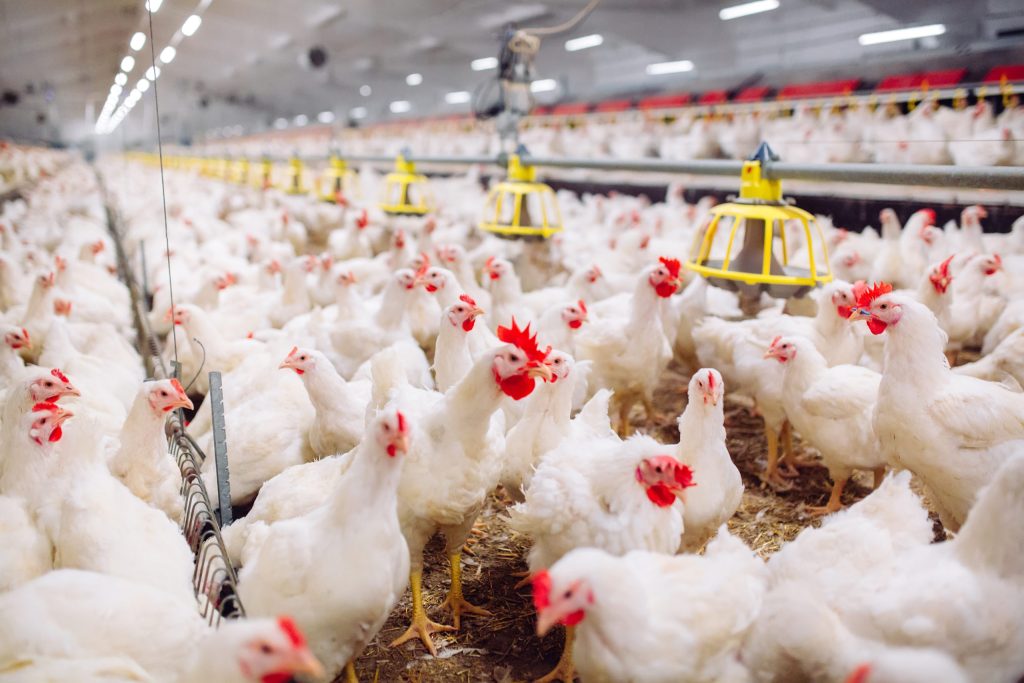
Commercial poultry confinement growers operate on precision. For contract broiler and layer producers in North Carolina, Virginia, South Carolina, and throughout the Southeast, ventilation, automation, power, and integrator timing drive profitability.
While catastrophic losses like fire or storm damage matter, most operational disruptions begin long before anything dramatic happens.
They begin when systems stop working.
Ventilation shuts down.
Power drops.
Controllers fail.
Feed systems stall.
As a result, production timing shifts and revenue pressure builds quickly.
Understanding how poultry farm insurance responds to these operational realities protects long term stability.
Power Dependency in Confinement Operations
Every commercial poultry house depends on uninterrupted electricity. Ventilation systems, cooling fans, feed lines, water delivery, alarm systems, and environmental controllers require continuous power.
Even short interruptions can stress birds and disrupt integrator commitments.
However, many producers assume standard poultry farm insurance covers power loss automatically. In reality, most policies exclude off premises power interruption unless specific endorsements are added.
What Commercial Growers Should Review
• Whether off premises utility service coverage applies
• How business income coverage is triggered
• Whether generator failure qualifies under equipment breakdown
• Waiting periods and documentation requirements
Although backup generators are critical, generator ownership alone does not guarantee income protection. If the generator fails during an outage and the policy excludes mechanical breakdown, the financial loss may remain uninsured.
Automation and Equipment Breakdown Risk
Modern confinement houses rely heavily on automation. Environmental controllers regulate temperature. Motors drive ventilation. Feed systems operate on coordinated timing.
When one component fails, production can slow or stop even if the structure remains intact.
Standard property insurance typically excludes mechanical and electrical failure. Therefore, poultry farm insurance programs should include Equipment Breakdown coverage when automation drives the operation.
Key Equipment Breakdown Questions
• Is Equipment Breakdown coverage included or added by endorsement
• How does the policy define covered equipment
• Does income loss from breakdown qualify
• Are electrical surge and controller malfunctions covered
As automation increases, operational exposure increases as well.
Integrator Contracts and Insurance Alignment
Commercial confinement growers operate under integrator agreements that define performance standards, delivery schedules, and compensation structures.
Insurance policies, however, define coverage triggers based on policy language.
Although these documents may appear aligned, they often are not.
Where Gaps Commonly Appear
• Indemnification clauses
• Additional insured requirements
• Income loss definitions
• Coverage limits compared to contract obligations
If poultry farm insurance does not reflect contractual risk allocation, financial responsibility may shift to the grower.
Consequently, reviewing contracts alongside policy terms reduces unexpected exposure.
Disease, Biosecurity, and Non Damage Interruptions
Biosecurity protocols may require delayed placement, sanitation periods, restricted movement, or depopulation. These disruptions can interrupt revenue without causing physical damage to buildings.
Many poultry farm insurance policies exclude disease related loss unless structured carefully.
What Confinement Growers Should Confirm
• Whether disease exclusions apply
• Whether income protection requires direct physical damage
• How government ordered shutdowns are treated
• Whether non damage business interruption coverage applies
These scenarios are not theoretical. They are operational realities in commercial poultry production.
Therefore, understanding how coverage responds before a disruption occurs prevents financial surprises.
Turning Operational Risk Into Structured Planning
Commercial poultry production depends on timing, environmental control, and contract precision. Insurance planning should follow the same structure.
Each operational dependency should connect directly to a review step:
Power dependency
→ Confirm off premises power and generator coverage
Automation reliance
→ Verify Equipment Breakdown protection
Contract obligations
→ Align policy language with integrator terms
Biosecurity exposure
→ Review disease exclusions and shutdown triggers
Rather than assuming coverage applies, confinement growers should verify how poultry farm insurance responds in each scenario.
Why This Matters Across North Carolina and the Southeast
Although North Carolina remains a leading poultry producing state, commercial confinement operations across Virginia, South Carolina, and neighboring regions face the same structural exposures.
Electricity dependency continues.
Automation reliance increases.
Integrator obligations remain strict.
Biosecurity exposure persists.
Accordingly, poultry farm insurance must reflect how commercial confinement houses function in practice, not just how buildings are valued.
Producers who connect operational awareness with policy review strengthen continuity and reduce uncertainty.
Poultry production demands precision. Risk management should operate with equal discipline.
North Carolina Department of Agriculture
https://www.ncagr.gov
National Chicken Council
https://www.nationalchickencouncil.org